5 Signs Your Business Needs a Custom SaaS Solution (And How to Choose the Right Partner)
Dujana shaikh
Flutter Developer
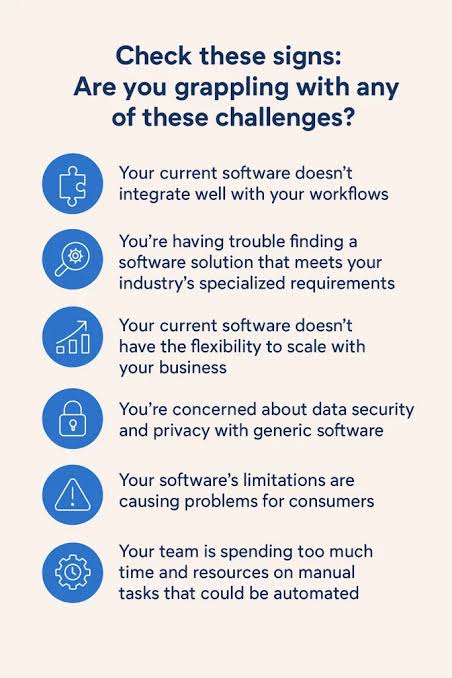
1) You're stitching together 5+ tools to run one process
If your team toggles between multiple apps, exports CSVs, and re-enters data, you're paying a hidden "integration tax" in time and errors. Custom SaaS consolidates workflows into a single system with the exact fields, roles, and automations you need.
What to look for:
Unified dashboard for core operations
Role-based access and audit logs
Native integrations (or easy APIs) with your existing stack
2) Your "standard" software can't handle your unique rules
Off-the-shelf tools assume generic processes. If your pricing, approvals, compliance, or reporting don't fit the template, you end up with workarounds. A tailored solution encodes your real-world rules—so the system supports how you actually work.
What to look for:
Configurable workflows and approval chains
Custom fields, formulas, and validation rules
Flexible reporting and exports
3) Data is siloed and decisions are slow
When sales, operations, finance, and support live in different places, leadership lacks a single source of truth. Custom SaaS centralizes data and provides real-time insights, shortening the path from question to decision.
What to look for:
Real-time analytics and KPI dashboards
Automated alerts for exceptions (delays, thresholds, SLAs)
Clean data model with clear ownership
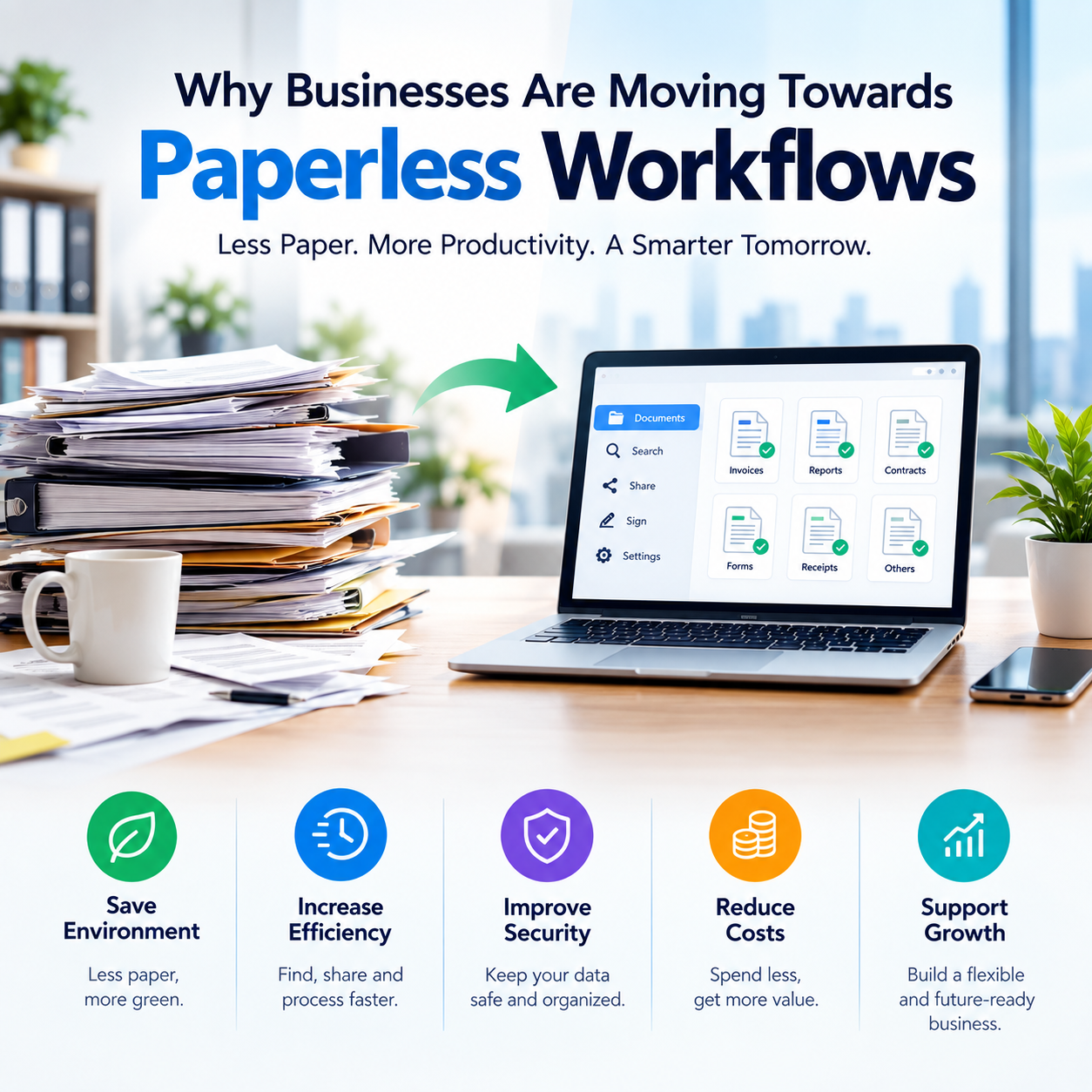
4) Manual work is growing faster than your team
If onboarding, reconciliations, follow-ups, or reporting are mostly manual, scaling will hurt. Automation built into a custom platform reduces repetitive tasks and frees your team for higher-value work.
What to look for:
Trigger-based automations (e.g., "when X happens, do Y")
Bulk actions and templates
Self-service portals for customers or partners
5) Security, compliance, or audit needs are increasing
As you grow, so do expectations around data protection, access control, and traceability. A purpose-built SaaS can enforce policies consistently and generate audit-ready logs.
What to look for:
Encryption, SSO, and granular permissions
Activity logs and change history
Backup, recovery, and uptime SLAs
5 Signs Your Business Needs a Custom SaaS Solution (And How to Choose the Right Partner)
1) You're stitching together 5+ tools to run one process
If your team toggles between multiple apps, exports CSVs, and re-enters data, you're paying a hidden "integration tax" in time and errors. Custom SaaS consolidates workflows into a single system with the exact fields, roles, and automations you need.
What to look for:
Unified dashboard for core operations
Role-based access and audit logs
Native integrations (or easy APIs) with your existing stack
2) Your "standard" software can't handle your unique rules
Off-the-shelf tools assume generic processes. If your pricing, approvals, compliance, or reporting don't fit the template, you end up with workarounds. A tailored solution encodes your real-world rules—so the system supports how you actually work.
What to look for:
Configurable workflows and approval chains
Custom fields, formulas, and validation rules
Flexible reporting and exports
3) Data is siloed and decisions are slow
When sales, operations, finance, and support live in different places, leadership lacks a single source of truth. Custom SaaS centralizes data and provides real-time insights, shortening the path from question to decision.
What to look for:
Real-time analytics and KPI dashboards
Automated alerts for exceptions (delays, thresholds, SLAs)
Clean data model with clear ownership
4) Manual work is growing faster than your team
If onboarding, reconciliations, follow-ups, or reporting are mostly manual, scaling will hurt. Automation built into a custom platform reduces repetitive tasks and frees your team for higher-value work.
What to look for:
Trigger-based automations (e.g., "when X happens, do Y")
Bulk actions and templates
Self-service portals for customers or partners
5) Security, compliance, or audit needs are increasing
As you grow, so do expectations around data protection, access control, and traceability. A purpose-built SaaS can enforce policies consistently and generate audit-ready logs.
What to look for:
Encryption, SSO, and granular permissions
Activity logs and change history
Backup, recovery, and uptime SLAs
Key Takeaway
"Why this matters now
Many businesses start with ready-made apps (CRM, ERP, spreadsheets, no-code tools). That works—until growth, compliance, or unique processes create friction. At that point, a custom SaaS solution can reduce manual work, unify data, and scale reliably."
Related Topics:###Tags: #custom #software##SaaS## automation##workflow##SME##startup
Ready to Accelerate Your Digital Products?
Partner with TechZone India Private Limited for enterprise web engineering, high-scale cloud platforms, and generative AI solutions.